
Why Understanding How We Change Matters More Than Ever
We're facing an uncomfortable truth about sustainability:
We know what needs to be done, but we're not doing it.
The United Nations' 17 Sustainable Development Goals, adopted in 2015 with a target date of 2030, represent humanity's best attempt at a comprehensive blueprint for planetary health. Yet progress has been, to put it mildly, disappointing.
The problem isn't lack of knowledge. We have the data, the technology, the policy frameworks.
What we're missing is something more fundamental: the inner capacities. The psychological, emotional, and collaborative skills needed to actually implement what we know. You can't systems-think your way out of a climate crisis if your nervous system is stuck in fight-or-flight. You can't collaborate across differences if you lack the embodied capacity for empathy and emotional regulation.
We all know from experience: daily life is hard enough that even the basics of self-care can feel like Herculean efforts. How can we expect sustained long-term commitment to difficult goals without cultivating perseverance at a neurobiological level for individuals?
This is where the emerging field of embodied neuroplasticity becomes not just interesting, but essential.
Your brain learns and adapts through molecular mechanisms we're only beginning to understand. These same mechanisms hold the key to systematically cultivating the inner development capacities that sustainability demands. And at the center of this story is a molecule you've probably never heard of; one that acts as the lynchpin between momentary experience and lasting transformation.
The Molecular Lynchpin: Meet CaMKII
Here's the fundamental puzzle of human change: How does a fleeting experience (a single breath, a moment of touch, a brief movement) produce changes that can last a lifetime? How does the transient become permanent?
The answer lies in a molecular mechanism (in scientific parlance) that operates in virtually every cell of your body. This mechanism is a protein, and it is especially abundant in your brain: calcium-calmodulin-dependent protein kinase II, mercifully abbreviated as CaMKII (pronounced "cam-kay-two").
Think of calcium ions as your body's universal "something is happening" signal. When you move, when someone touches you, when you take a deep breath, when a neuron fires: calcium floods into cells through specialized channels in the cell membrane. This calcium surge is brief, lasting only milliseconds to seconds. Yet somehow, these momentary bursts can reshape your nervous system in ways that persist for months or years.
CaMKII is the bridge between these two timescales.
Here's how it works: When calcium enters a cell, it binds to a protein called calmodulin. This calcium-calmodulin complex then activates CaMKII.
But here's where it gets interesting, and why CaMKII is so crucial for understanding lasting change. Once activated, CaMKII does something phenomenal: it modifies itself through a process called autophosphorylation (essentially, it adds chemical tags to its own structure). These tags allow CaMKII to remain active even after the calcium levels return to normal.
In other words, CaMKII converts a temporary signal into a persistent one.
It's a molecular mechanism for memory: not just in the sense of remembering facts, but in the deeper sense of your tissues and nervous system "remembering" experiences and being changed by them.
This is why CaMKII is the most abundant protein at excitatory synapses in your brain.
Bold claim I can lay out cold in a blog post (not so much in the peer-reviewed paper): CaMKII is the mechanism by which learning happens at the cellular level. When you practice a skill, when you cultivate a new emotional response, when you train your attention: CaMKII is encoding those experiences into the physical structure of your neural circuits, and in your genes.
The Windmill That Keeps Spinning: Understanding Molecular Memory
To really grasp why CaMKII matters, imagine a spinning wheel with a weighted flywheel attached to it. This is the metaphor that makes the mechanism click.
Give the wheel a push. That's calcium rushing into the cell, the initial signal that something is happening. Maybe you're doing a yoga pose, receiving a massage, practicing a breathing technique, or simply paying close attention to a sensation in your body.
The wheel starts spinning. That's CaMKII activating, beginning to modify proteins, trigger gene expression, and initiate structural changes in the cell.
But here's the crucial part: the flywheel keeps it spinning through momentum. Even after you stop pushing, even after the calcium levels drop back to baseline, the wheel continues to turn. That's autophosphorylation. CaMKII has tagged itself in a way that allows it to remain active, continuing to drive cellular changes long after the initial signal has faded.
The harder and more frequently you push, the faster and longer it spins. This is where practice comes in. A single deep breath creates a brief calcium signal and a small amount of CaMKII activity. But repeated practice (daily meditation, regular movement, consistent somatic awareness) creates repeated calcium signals that build on each other. The flywheel spins faster. The changes become more pronounced and more durable.
This isn't just a metaphor, it's a mechanistic explanation for why contemplative and somatic practices work. When you practice mindful breathing, you're not just "relaxing." You're creating rhythmic patterns of calcium influx in specific neural circuits. These patterns activate CaMKII, which then modifies the synaptic connections in those circuits, making certain neural pathways stronger and more accessible.
Do this repeatedly, and you're in a very real sense rewiring your nervous system.
Consider a concrete example: learning to regulate your emotional response to stress. The first time you pause and take three deep breaths when you feel anxious, you're creating a small calcium signal in the neural circuits connecting your prefrontal cortex (involved in conscious regulation) and your amygdala (involved in threat detection).
CaMKII activates briefly. The effect is modest.
But if you practice this consistently (pausing and breathing whenever anxiety arises), you're repeatedly activating those same circuits. Each time, calcium flows in. Each time, CaMKII spins up. The flywheel builds momentum. Over weeks and months, the synaptic connections between your prefrontal cortex and amygdala physically change. The regulatory pathway becomes stronger, more automatic, more accessible. What once required conscious effort becomes increasingly natural. Your nervous system has learned a new pattern.
This is embodied neuroplasticity: the body's experiences, translated through calcium signaling and CaMKII activation, reshape the brain's structure and function.
Beyond Neurons: A Body-Wide Learning System
Here's where the story gets even more interesting: CaMKII isn't just in your brain. It's in your muscle cells, your heart cells, your skin cells, your connective tissue cells: essentially everywhere your body needs to adapt and learn.
This means the mechanism of learning isn't confined to your nervous system. Your fascia (the connective tissue that wraps around every muscle, organ, and structure in your body) also uses calcium-CaMKII signaling to adapt to mechanical forces. When you stretch, when you move, when you receive bodywork, you're experiencing calcium signals in fascial cells. These cells respond by remodeling the extracellular matrix (ECM), the gel-like substance that gives fascia its properties.
This creates a set of nested feedback loops. Your bodily experiences (movement, touch, breath) trigger calcium signaling in fascial tissue, which remodels the ECM, which changes how mechanical signals are transmitted to your nervous system, which influences your brain's activity patterns, which affects how you move and breathe, which creates new patterns of calcium signaling in your tissues.
The research identifies this as the "CHA axis": calcium, CaMKII, and hyaluronan (HA, a key component of the ECM). It's the body-wide, pre-neural system for encoding experience into tissue architecture. We classify it as pre-neural because it happens independent of neuro-endocrine control.
This is why practices that engage the body (yoga, tai chi, dance, manual therapy, even simple mindful movement) can have such profound effects on mental and emotional states. You're not just "working out stress." You're engaging a fundamental biological mechanism that connects bodily experience to neural plasticity.
The Big Picture: Inner Development for Planetary Health
Now we can connect the molecular to the planetary.
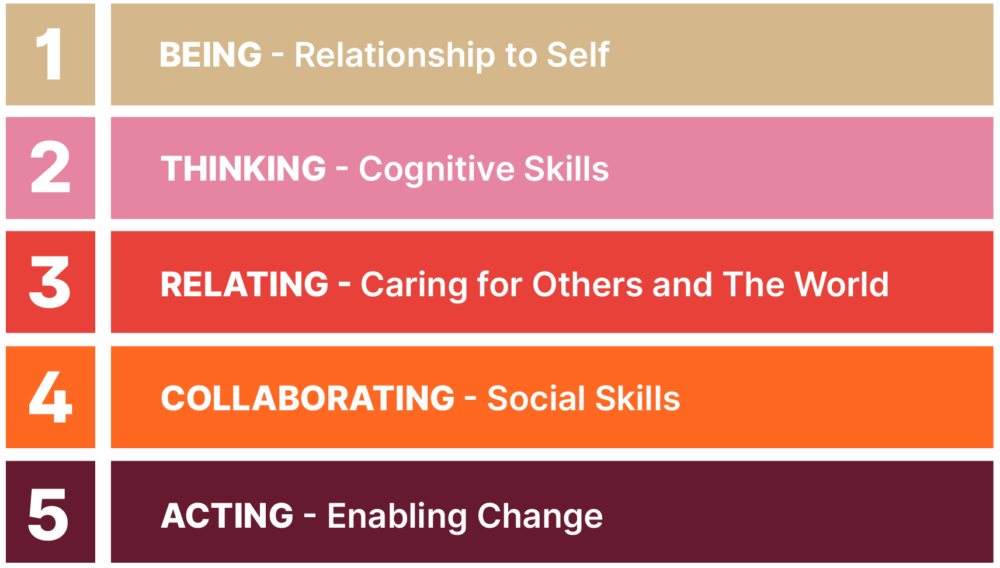
The Inner Development Goals (IDG) framework has emerged as a complement to the UN's Sustainable Development Goals. While the SDGs focus on external targets (clean water, renewable energy, reduced inequality), the IDGs focus on the internal capacities needed to achieve those targets. The framework identifies 23-25 essential skills organized into five dimensions:
Being (relationship to self): inner compass, integrity, self-awareness, presence
Thinking (cognitive skills): critical thinking, complexity awareness, perspective-taking
Relating (caring for others): appreciation, empathy, compassion, connectedness
Collaborating (social skills): communication, co-creation, intercultural competence, trust
Acting (enabling change): courage, creativity, optimism, perseverance
These aren't abstract virtues; they're embodied capacities. They describe what we can understand mechanistically as patterns of neural activity that may be systematically cultivated through practices that engage the feedback loops we've been discussing.
Consider self-awareness, a foundational capacity in the "Being" dimension. Self-awareness depends on interoception:your ability to sense what's happening inside your body. This capacity is mediated by specific neural circuits connecting your body to your insula (a brain region involved in interoceptive awareness).
When you practice body scans, mindful movement, or somatic awareness exercises, you're creating repeated calcium signals in these interoceptive circuits. CaMKII activates. The synaptic connections strengthen. Your interoceptive awareness literally increases through neuroplastic change.
Or consider empathy and compassion, essential for the "Relating" dimension. These capacities depend on neural circuits that allow you to recognize and resonate with others' emotional states. Research shows that compassion training produces measurable changes in brain structure and function; changes mediated by the same calcium-dependent plasticity mechanisms.
When you practice loving-kindness meditation or engage in perspective-taking exercises, you're not just thinking kind thoughts. You're creating patterns of neural activity that, through repeated calcium-CaMKII signaling, physically reshape the circuits underlying empathic response.
Systems thinking and complexity awareness (crucial for the "Thinking" dimension), depend on your brain's ability to hold multiple perspectives simultaneously and update mental models in response to new information. This cognitive flexibility is fundamentally a form of neural plasticity. When you practice examining issues from multiple angles, when you deliberately challenge your assumptions, when you engage with complexity rather than seeking simple answers... you're cultivating the calcium signals that allow CaMKII to remodel the neural circuits underlying cognitive flexibility.
Collaboration and trust: the "Collaborating" dimension requires the integration of emotional regulation, perspective-taking, and behavioral flexibility. These are all neuroplastic capacities that can be cultivated through practices engaging the body-brain axis.
Perseverance and courage (part of the "Acting" dimension) depend on your ability to maintain commitment in the face of difficulty and uncertainty. This isn't just willpower. It's a pattern of neural activity in circuits connecting your prefrontal cortex (goal-directed behavior) with limbic regions (emotional response). Practices that train sustained attention and emotional regulation, such as meditation, breathwork, mindful movement, strengthen these circuits through calcium-dependent plasticity.
The profound implication: The inner capacities we need for sustainability aren't fixed traits. They're trainable skills, grounded in neuroplastic mechanisms that we're beginning to understand at the molecular level.
This means that contemplative practices, somatic therapies, mindful movement, and other body-based approaches aren't just "wellness" or "self-care" in the individualistic sense. They're technologies for cultivating the neurobiological capacities that collective transformation requires.
When a community organizer practices emotional regulation techniques, she's not just managing her own stress. She's training the neural circuits that will allow her to remain present and effective in difficult conversations about environmental justice.
When a policy maker engages in systems thinking exercises, he's not just improving his analysis, he's strengthening the neural networks that allow him to perceive interconnections and resist simplistic solutions.
When an educator cultivates compassion through contemplative practice, she's not just becoming a nicer person. She's developing the embodied capacity to create learning environments where students feel safe enough to engage with difficult truths about planetary crisis.
The Justice Dimension: Who Gets Access to Neuroplasticity?
But here's the critical caveat that the research emphasizes: socioeconomic inequality creates structural barriers to neuroplasticity and inner development.
The practices that support calcium-CaMKII-mediated plasticity (contemplative training, somatic therapies, movement practices, even basic stress reduction: require resources: time, money, safe spaces, cultural permission to prioritize inner development. These resources are unequally distributed.
Lower socioeconomic status is associated with chronic stress, which dysregulates calcium signaling and impairs neuroplasticity. Poverty creates conditions (food insecurity, housing instability, exposure to violence, lack of access to green space) that actively undermine the biological mechanisms of adaptive change.
This means that understanding embodied neuroplasticity isn't just a scientific question: it's a justice question. If inner development capacities are neurobiologically grounded, and if the conditions for healthy neuroplasticity are unequally distributed, then cultivating these capacities at scale requires addressing structural inequality.
We can't just offer mindfulness apps and yoga classes and expect to transform society. We need to ensure that everyone has access to the material conditions:economic security, safe housing, nutritious food, clean environments, quality education, healthcare:that support healthy neuroplastic development.
The research also notes that contemplative practices can cause harm, particularly for people with trauma histories. Mindfulness-based interventions can trigger adverse reactions in individuals with PTSD or childhood trauma. This underscores the need for trauma-informed, individualized approaches rather than one-size-fits-all prescriptions.
Understanding the biology of change should make us more compassionate, not less. When we recognize that behavior emerges from complex interactions between biology and environment: interactions over which individuals have limited control: we move away from moral blame and toward systemic solutions.
From Molecules to Movements: A New Framework for Change
What emerges from this research is a radically integrated view of human transformation:
At the molecular level, calcium-CaMKII signaling provides the mechanism by which transient experiences create lasting biological changes.
At the tissue level, this signaling operates across the body:in fascia, skin, muscle, and nervous system:creating a distributed system for encoding experience.
At the neural level, these mechanisms drive synaptic plasticity, network reorganization, and structural brain changes that underpin learning and adaptation.
At the psychological level, these neural changes manifest as enhanced interoceptive awareness, emotional regulation, cognitive flexibility, and stress resilience.
At the social level, these individual capacities enable the collective behaviors: empathy, collaboration, systems thinking, sustained commitment:that sustainability requires.
This work isn't about reductionism, or claiming that compassion is "just" calcium signaling. It's about integration: recognizing that compassion has a biological substrate, and that understanding this substrate can inform how we systematically cultivate compassion at individual and collective scales.
The implications are profound:
For education: We can design learning environments that explicitly engage embodied neuroplasticity, helping students develop not just knowledge but the inner capacities to use that knowledge wisely.
For therapy and healthcare: We can develop more precise interventions that target specific calcium-CaMKII pathways: using breathwork for autonomic regulation, movement for interoceptive awareness, mindfulness for cognitive flexibility.
For organizational development: We can create workplace practices that support the neuroplastic development of collaboration, creativity, and resilience: not as abstract goals but as trainable capacities with known biological mechanisms.
For social movements: We can recognize that collective transformation requires not just changing policies but cultivating the embodied capacities that make new ways of being together possible.
For sustainability efforts: We can integrate inner development into climate action, environmental justice, and planetary health initiatives: not as a luxury but as a necessity grounded in our biology.
Conclusion: The Flywheel of Collective Transformation
The spinning flywheel of CaMKII offers a powerful metaphor for the work ahead. Individual practices create small pushes: brief calcium signals, modest neuroplastic changes. But when these practices are sustained, when they're shared across communities, when they're supported by structures that ensure equitable access, the flywheel builds momentum.
Each person who cultivates self-awareness makes it slightly easier for others to do the same. Each community that develops practices for collective emotional regulation creates a model that others can adapt. Each organization that prioritizes inner development alongside external goals demonstrates that another way is possible.
The momentum builds. The wheel spins faster. What once required enormous effort becomes increasingly natural. Not because human nature has changed, but because we've learned to work with our nature: to engage the biological mechanisms through which experience reshapes us.
This is the promise of embodied neuroplasticity for planetary health: not a quick fix, not a simple solution, but a scientifically grounded framework for understanding how we change. The upshot informs how we can support that change at every level; from molecules to movements, from individual practice to collective transformation.
The Sustainable Development Goals won't be achieved through policy alone. They require inner development:the cultivation of capacities that are quite literally embodied in our neurobiology. Understanding the calcium-CaMKII mechanisms that underlie this development doesn't reduce the mystery of human transformation. It deepens it, revealing the elegant biological systems that make transformation possible.
The question isn't whether we can change. The mechanisms for change are built into our biology. The question is whether we'll create the conditions (material, social, cultural) that allow everyone to access these mechanisms. Whether we'll recognize that inner development isn't a luxury for the privileged few, but a necessity for collective survival.
The flywheel is already spinning.
But can we overcome the obstacles that stand in its way? Can we dismantle the systemic barriers—the poverty, inequality, lack of access—that prevent millions from ever learning how to push in the first place?
Can we transform the chronic stress and trauma that dysregulates nervous systems before they even have a chance? The real question isn't just how hard we'll push, but whether we have the capacity to change societal constraints so everyone can push together.
For the full narrative review published in Challenges Journal of Planetary Health, click here:
Stay connected with news and updates!
Join my mailing list and receive the latest on spiral motion, metabolism, and more.
Don't worry, your information will not be shared.
Your data is respected.