Tempo for Heart Health: Pleiomobility
2027 Semester 1
10 Live Sessions to Train Your Heart, Lungs and Metabolism
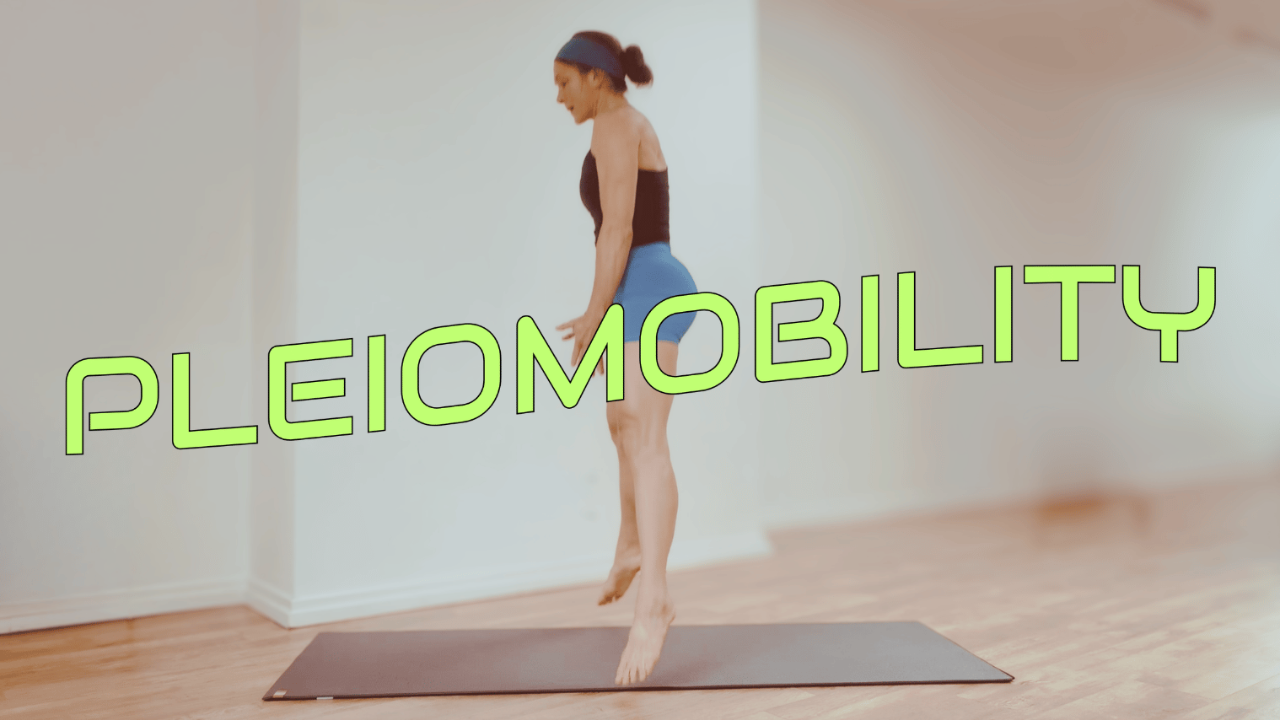
Pleiomobility is spiral movement played at tempo. Across 10 live sessions, we take the rotational intelligence of the Five Filaments and add rhythm, rebound and pace, so your mobility practice becomes cardiometabolic training.
The aim is simple and measurable: spend purposeful time in your target heart rate zones.
You'll learn 10 Plays (P1–P10).
You'll build ground reaction awareness, elastic rebound and vertical power, then sequence it all into timed intervals and counted sets you can keep using long after the program ends.
Session Dates
Pleiomobility Principles
Kit List
Pleiomobility Program
-
10 PLEIO PLAYS
10 lessons- 1. HINGE-SQUAT HOPS
- 2. QUADRUPED HAND POPS
- 3. CROUCH SPRINGS TO WARRIOR
- 4. PRONE SWIMMING
- 5. SEATED ROLLERUPS
- 6. SLOLOM REBOUNDS
- 7. SUPINE EXTENSIONS
- 8. ROCK-TO-STAND
- 9. KNEELING UPJUMPS
- 10. WIPER JUMPS
When were you last drenched in sweat?
Ten live sessions. Ten Plays. One measurable outcome: more time in the zones that build cardiometabolic health. Each session is 60 minutes, live on Spiral Syllabus with Dr Karen Kirkness as your guide. Session recordings kept in one place for two years of access.
Starts Monday 11 January, 2027
The Science Behind Pleiomobility
Cardiorespiratory fitness, often measured as VO2max, is one of the most powerful markers of how well your body is ageing.
The good news is that it's trainable at any age. The question is how to train it efficiently? And can we train in the way we love to move?
Much of the answer comes from the work of Professor Martin Gibala at McMaster University, whose research helped establish high-intensity interval training (HIIT) as a time-efficient alternative to long, steady cardio.
Gibala and colleagues showed that brief, repeated bouts of intense effort can drive many of the same adaptations as traditional endurance training, in the heart, the lungs and the mitochondria of skeletal muscle, for a fraction of the time commitment.
A decade of follow-up research has reinforced this. A 2024 umbrella review of systematic reviews (Poon, Gibala and colleagues) found that HIIT improves cardiorespiratory fitness across adult populations, including whole-body and home-based formats that need no equipment.
Low-volume HIIT also appears effective, which is why it is repeatedly recommended as a pragmatic option for people who are short on time.
No, walking and slow flow won't cut it
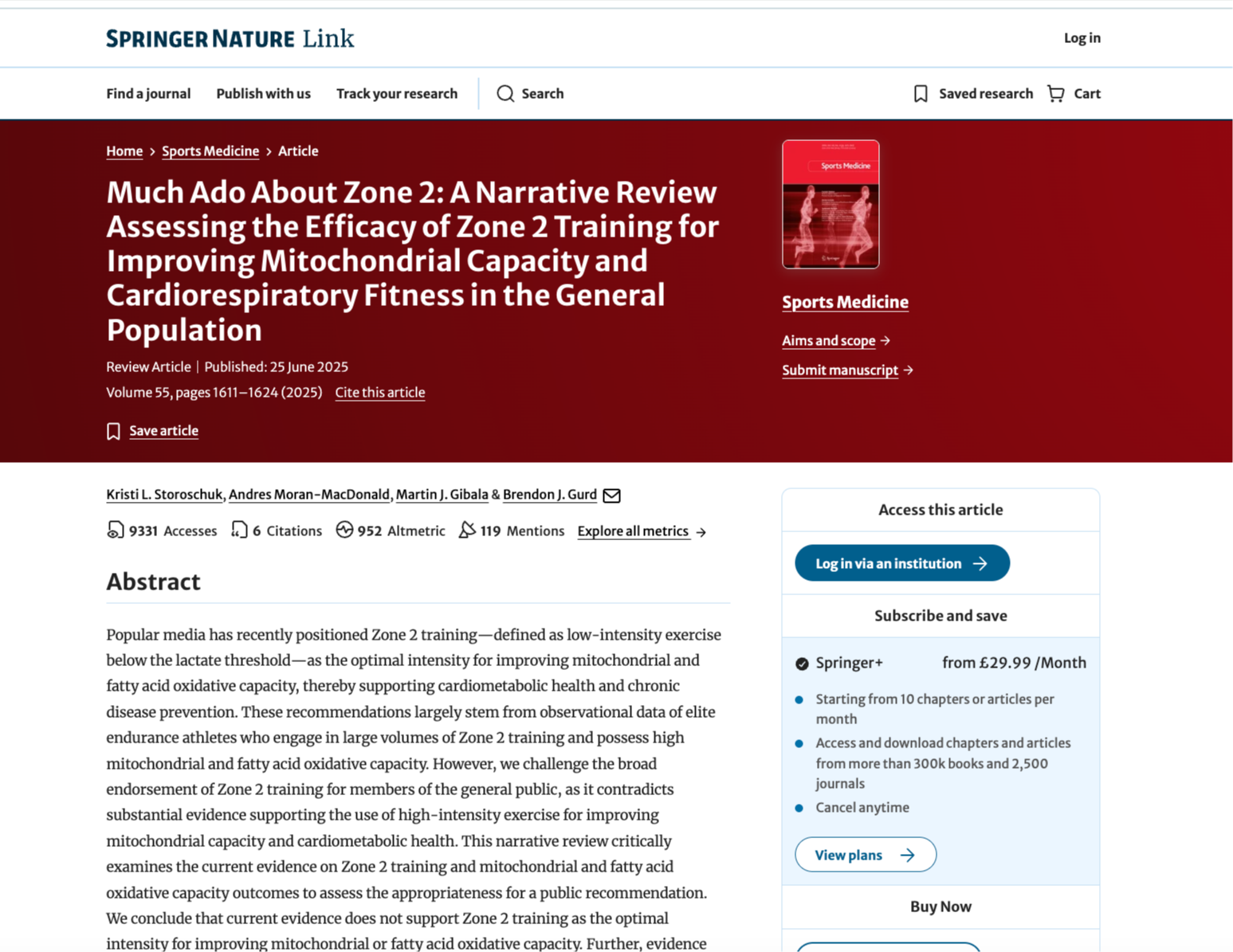
What about Zone 2? Slow, steady "Zone 2" training has become hugely popular, but a 2025 review co-authored by Gibala concluded that current evidence does not justify recommending Zone 2 for the general population, especially when training time is limited.
Studies comparing training mixes suggest that combining easier work with some Zone 3 tempo and higher-intensity intervals often performs best.
Pleiomobility is built on that mix.
Can movement practice really be cardio?
Yes, but only if the intensity is real. In a 2023 trial (Park & Yang), fast-tempo sun salutations performed at a 1.5-second tempo exceeded 90% of maximum heart rate and crossed the lactate threshold.
Four weeks of this interval "cardio yoga" improved VO2max and metabolic flexibility compared with traditional, slower practice. Whole-body functional circuits have reached 92–96% of maximum heart rate.
Your Heart is Trainable
Cardiorespiratory fitness responds to training at every age and stage. Higher-intensity work improves VO2max more efficiently than moderate continuous exercise across adult, older-adult and clinical populations.
Tempo is Tranformative
Speed up a simple lunge transition and it becomes a different physiological event. Tempo, interval and recovery are the levers that move your practice from mobility into true cardio and the layered metabolic response.
Measuring in Real Time
Heart rate is your real-time feedback loop. Training to your zones means every minute on the mat counts towards your heart health, and it's why this programme asks you to wear a tracker.
Your heart is tidal. Train it like that
Rebound and plyometric work recruits large muscle mass and improves both cardiorespiratory fitness and power in untrained people.
The same research carries a clear warning: whole-body formats underperform when sessions fail to sustain enough cardiovascular load. Adaptations track the intensity you actually achieve, not the label on the class.
That's why heart rate monitoring sits at the centre of this program, and why the kit list is important.
Register Now
Cardio training doesn't have to be punishment
I developed Pleiomobility for people like me who really love to move. You don't have to grind away on the treadmill to move the needle on heart health!
Call To Action