Experience Spiral Motion: The Five Filaments Repertoire
Autumn Program
10 Weekly Sessions to Reset Your Inner Ocean
Across 10 weeks, this program works methodically through the Five Filaments Repertoire:
Hand, Shoulder, Foot, Hip, and Axial Matrix.
Together, these five movement families form a practical syllabus of approximately 150 movements, designed to help movers and teachers explore the coupled motion units that shape whole-body spiral movement.
Each session is a recorded 60-minute session covering 5 sets of gliding movement in detail.
To book the next LIVE online 5F Repertoire Program click here: https://www.spiralsyllabus.com/offers/WvJ7Hwg5
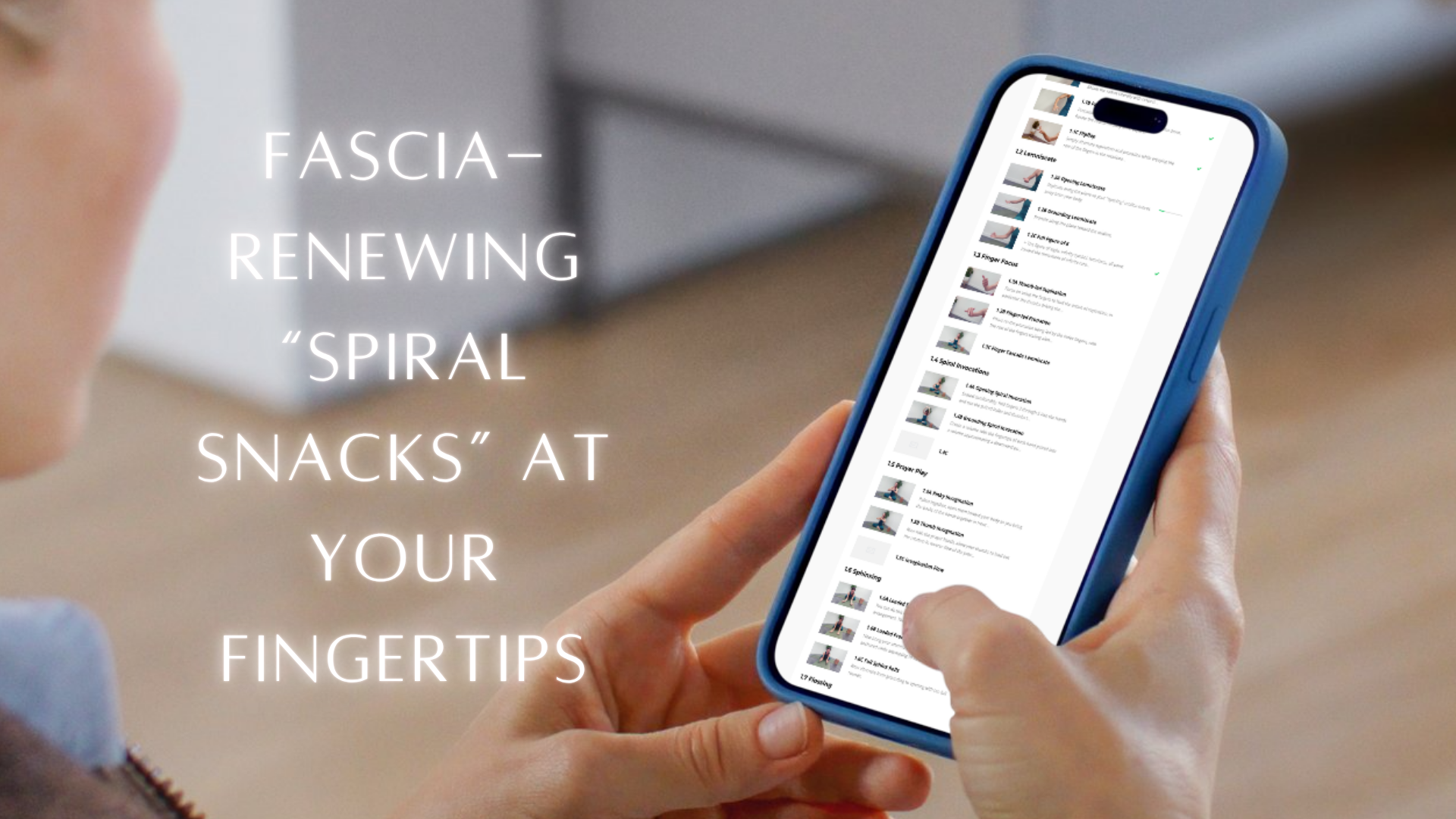
Session Dates
5F Principles
5F Repertoire
-
Introduction to 5F Repertoire
3 lessons- What is the 5F Repertoire?
- The Importance of Breath Coordination in the 5F Repertoire
- Getting Started with the 5F Repertoire
-
1 - Hand Filament
30 lessons-
1.1 Simple Supination & Pronation
- 1.1A Supination
- 1.1B Pronation
- 1.1C Flipflop
-
1.2 Lemniscate
- 1.2A Opening Lemniscate
- 1.2B Grounding Lemniscate
- 1.2C Full Figure of 8
-
1.3 Finger Focus
- 1.3A Thumb-led Supination
- 1.3B Finger-led Pronation
- 1.3C Finger Cascade Lemniscate
-
1.4 Spiral Invocations
- 1.4A Opening Spiral Invocation
- 1.4B Grounding Spiral Invocation
- 1.4C
-
1.5 Prayer Play
- 1.5A Pinky Invagination
- 1.5B Thumb Invagination
- 1.5C Invagination Flow
-
1.6 Sphinxing
- 1.6A Loaded Supination
- 1.6B Loaded Pronation
- 1.6C Full Sphinx Rolls
-
1.7 Flossing
- 1.7A Flexor Flossing
- 1.7B Hand Squats
- 1.7C Fist Rolls
-
1.8 Flamingo
- 1.8A Flamingo Walking
- 1.8B Flamingo Rolling
- 1.8C Flamingo Dance
-
1.9 Prone Prayer
- 1.9A Prone Matched Supination
- 1.9B Prone Matched Pronation
- 1.9C Prone Roller
-
1.10 Fluttering
- 1.10A Supinating Flutter (Supinutter)
- 1.10B Pronating Flutter (Pronutter)
- 1.10C Full Butterfly
-
-
2 - Shoulder Filament
30 lessons-
2.1 Shoulder Rotation: Simple Internal and External Rotation
- 2.1A External Rotation
- 2.1B Internal Rotation
- 2.1C Flipflop
-
2.2 Lemniscate (Figure of 8)
- 2.2A Opening Arc
- 2.2B Grounding Arc
- 2.2C Shoulder Flow Lemniscate (Figure of 8)
-
2.3 Hitchhiker
- 2.3A Hitchhiker (Thumb-led Opening)
- 2.3B Finger-Led Grounding
- 2.3C Alternating Hitchhiker
-
2.4 Butterfly
- 2.4A Opening Butterfly
- 2.4B Grounding Butterfly
- 2.4C Full Butterfly
-
2.5 Binoculars
- 2.5A Opening Binoculars
- 2.5B Grounding Binoculars
- 2.5C Full Binoculars
-
2.6 Elbow-led
- 2.6A Elbow Walking
- 2.6B Elbow Cocoon
- 2.6C
-
2.7 Blading
- 2.7A Opening Blade
- 2.7B Grounding Blade
- 2.7C Full Blading
-
2.8 Eggbeater
- 2.8A Opening Eggbeater
- 2.8B Grounding Eggbeater
- 2.8C Full Eggbeater
-
2.9 Strumming
- 2.9A Opening Strum
- 2.9B Grounding Strum
- 2.9C Full Strum
-
2.10 Möbius
- 2.10A Opening Mobius
- 2.10B Grounding Mobius
- 2.10C Mobius Loop
-
-
3 - Foot Filament
30 lessons-
3.1 Monkey Drum: Supination & Pronation
- 3.1A Opening Monkey Drum
- 3.1B Grounding Monkey Drum
- 3.1C Full Monkey Drum
-
3.2 Walkaround
- 3.2A Standing Walkaround (Supination Focus)
- 3.2B Standing Walkaround (Pronation Focus)
- 3.2C Standing Walkaround Flow
-
3.3 Walking 3-point
- 3.3A Triad Supination
- 3.3B Triad Pronation
- 3.3C Triad Circling
-
3.4 Lemniscate: Figure of 8
- 3.4A Supinating
- 3.4B Pronating
- 3.4C Lemniscate Flow
-
3.5 Lunge
- 3.5A Lunge Supination
- 3.5B Lunge Pronation
- 3.5C Lunge Roly-poly
-
3.6 Toe-Twirler
- 3.6A Twirly Supination
- 3.6B Twirly Pronation
- 3.6C Twirly Toe Flow
-
3.7 Chair Butterfly
- 3.7A Chair Butterfly Supination
- 3.7B Chair Butterfly Pronation
- 3.7C Chair Butterfly Flow
-
3.8 Prone
- 3.8A Supination
- 3.8B Pronation
- 3.8C Flow
-
3.9 Supine
- 3.9A Supination
- 3.9B Pronation
- 3.9C Flow
-
3.10 Scoop
- 3.10A Scoop Supination
- 3.10B Scoop Pronation
- 3.10C Foot Scoop Flow
-
-
4 - Hip Filament
30 lessons-
4.1 Hip Rolls: Simple Internal & External Rotation
- 4.1A External Rotation
- 4.1B Internal Rotation
- 4.1C Rolling Flow
-
4.2 Hip Lemniscate (Figure of 8)
- 4.2A Opening Arc
- 4.2B Grounding Arc
- 4.2C Hip Flow Lemniscate (Figure of 8)
-
4.3 Lizard
- 4.3A Eversion (Blading)
- 3.3B Inversion
- 3.3C Blading Flow
-
4.4 Squat
- 4.4A Squat
- 4.4B Kneeling Virasana (Hero)
- 4.4C Squat-Kneel Flow
-
4.5 Demi-Squat
- 4.5A Demi-Squat Flex
- 4.5B Demi-Squat Twist
- 4.5C Squat-Twist Flow
-
4.6 L-Sit
- 4.5A L-Sit
- 4.5B Demi-Hero
- 4.5C L-Sit to Demi-Hero Flow
-
4.7 Straddle
- 3.7A Opening Straddle
- 4.7B Grounding Straddle
- 4.7C Straddle Flow
-
4.8 Shinny
- 4.8A Opening Shinny
- 4.8B Grounding Shinny
- 4.8C Shinny Flow
-
4.9 Prone Rollovers
- 4.9A Opening Rollover
- 4.9B Grounding Rollover
- 4.9C Twisty Rollover
-
4.10 Supine Swirl
- 4.10A Opening Swirl
- 4.10B Grounding Swirl
- 4.10C Supine Swirl
-
-
5 - Axial Matrix Filament
33 lessons-
5.1 Quadruped
- 5.1A Cat
- 5.1B Cow
- 5.1C Thread the Needle
-
5.2 Lunge
- 5.2A Cat Lunge
- 5.2B Crescent/Cow Lunge
- 5.2C Revolving Lunge
-
5.3 Camel
- 5.3A Flexion Circling
- 5.3B Extension Circling
- 5.3C Monkey Drum
-
5.4 Crouch
- 5.4A Crouch
- 5.4B Extended Crouch
- 5.4C Revolving Crouch
-
5.5 Squat
- 5.5A Flexed Squat
- 5.5B Extended Squat
- 5.5C Squat Spiral
-
5.6 Seated
- 5.6A Flexed
- 5.6B Extended
- 5.6C Revolving
-
5.7 Homologous Flip
- 5.7A Happy Baby
- 5.7B Bhekasana
- 5.7C Prone Galaxy Rolls
-
5.8 Homologous Prone
- 5.8A Child's Pose
- 5.8B Locust
- 5.8C Locust Rollovers
-
5.9 Rising Quadruped
- 5.9A Downward Dog
- 5.9B Wheel
- 5.9C Wild Thing
-
5.10 Supine Opposed Spirality
- 5.10A Flexbud
- 5.10B Extended Bud
- 5.10C Rolling Bridge-Reach
-
5.11 Inversions (Optional)
- 5.11A Inverted Pike
- 5.11B Hollowback Hand/Headstand
- 5.11C Revolving Inversion
-
The Science Behind the Repertoire
The 5F Repertoire is a pluralist movement heuristic: an open-ended framework for discovery. It draws from many movement traditions without belonging to one denomination. Rotation is the constraint, spiral motion is the organising principle, and the research itself is the practice.
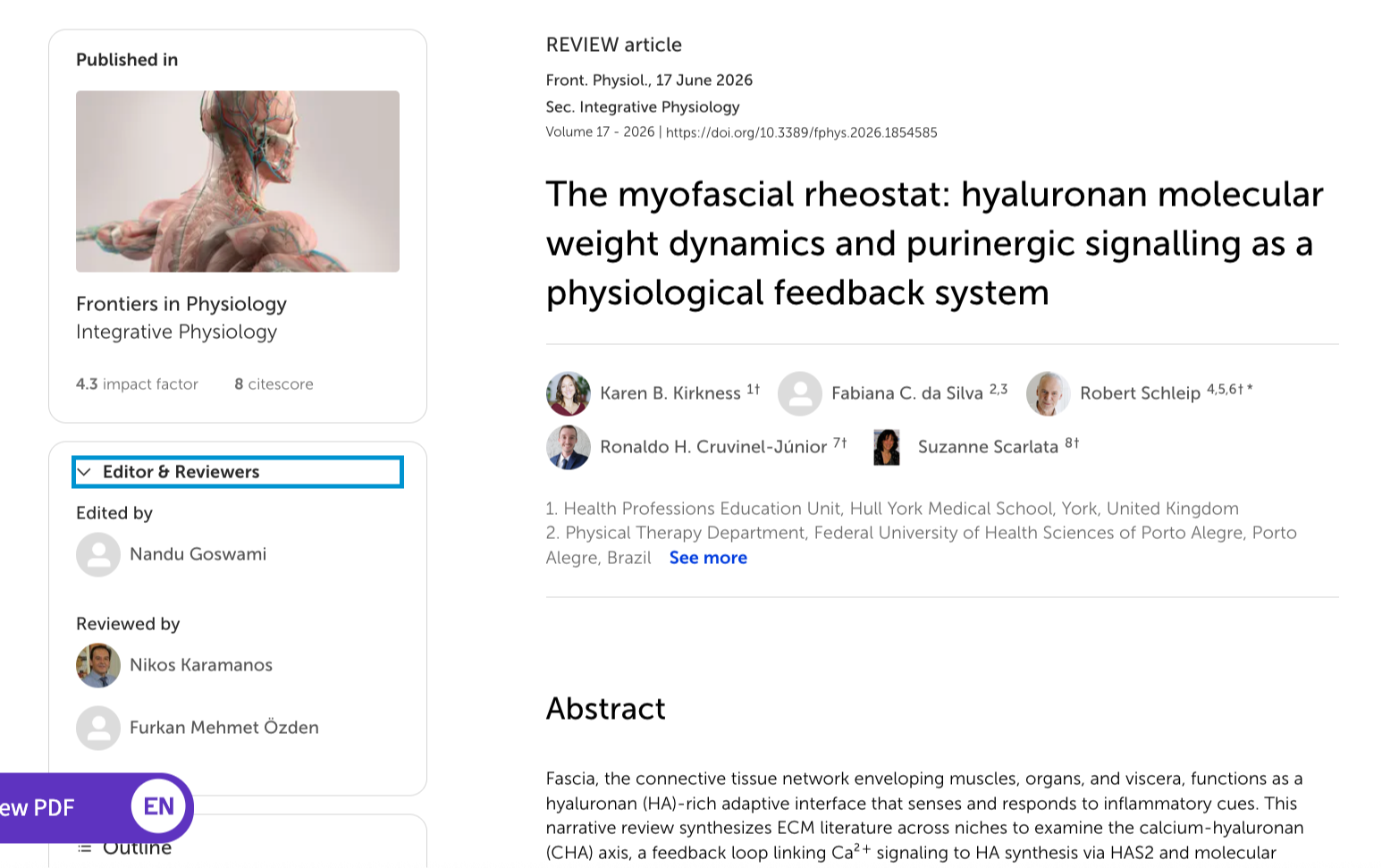
The Five Filaments Repertoire is grounded in Karen Kirkness’s published research on the myofascial rheostat: a model of fascial tissue as a living, responsive system that continually adjusts to movement, load, hydration, inflammation, metabolic state, and recovery.
At the centre of this model is hyaluronan, or HA — the gliding molecule that also forms an intrinsic comms system.
Healthy HA supports hydration, lubrication, tissue resilience, and smooth movement between fascial planes. But as HA becomes fragmented, excessive, or poorly cleared, the fascial environment can become more viscous and less responsive. This may contribute to stiffness, discomfort, impaired gliding, and reduced movement confidence.
The Five Filaments Repertoire translates these ideas into practice. Rather than chasing flexibility, strength, or intensity as isolated goals, we begin with the conditions that allow tissue to adapt well. We use spiral motion, rotational biomechanics, graded loading, and movement variability to support the body’s own capacity for turnover, clearance, and repair.
Read the Paper
The myofascial rheostat: a model of fascial tissue as a living, responsive system.
This review integrates how calcium signaling, HA synthesis, and metabolic constraints work together to regulate fascia — building on the proposed calcium-hyaluronan (CHA) axis as a physiological rheostat.
The authors extend the previously proposed "Quiet or Riot" reciprocity model by integrating ATP/NAD⁺-mediated feedback into the CHA axis
10 Weeks to Improved Mobility
Across 10 weeks, you will learn the full 5F Repertoire directly from Karen Kirkness, creator of the Five Filaments system and a researcher working at the forefront of fascia, hyaluronan, movement science, and rotational biomechanics.
The programme works methodically through the five movement families: Hand, Shoulder, Foot, Hip, and Axial Matrix. Together, these families create a practical syllabus of spiral motion, giving you a clear framework for exploring how rotation moves through the whole body.
Register Now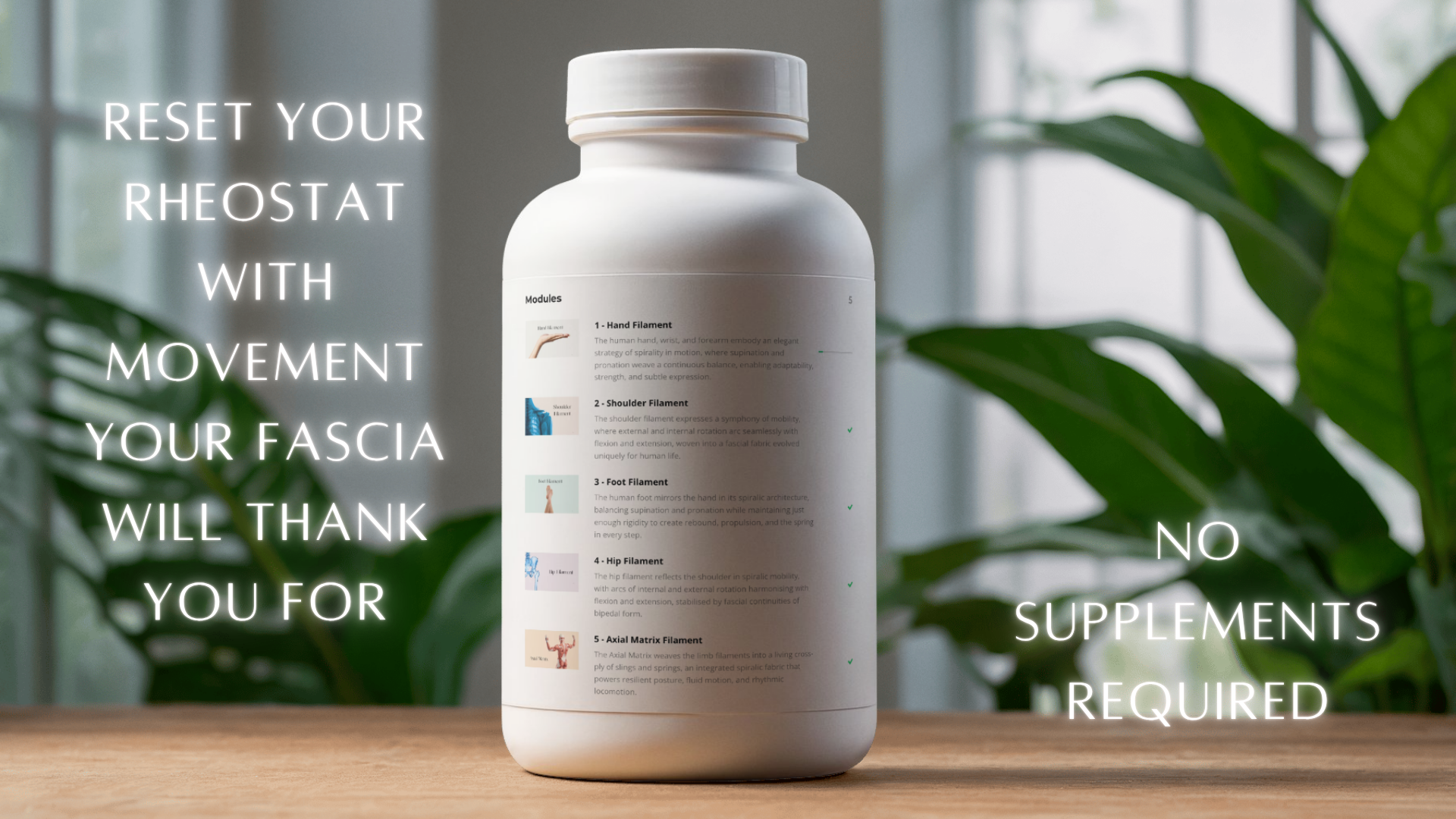
Fascia is fluidic
At the heart of this work is the idea that fascia is not passive tissue. It is a living, responsive, fluid-rich matrix that helps organise movement, sensation, hydration, repair, and adaptation.
Your Inner HA Ocean
Within this matrix, hyaluronan (HA) behaves like the body’s inner aquarium: a nourishing signalling environment that supports the glide between tissues and helps the whole system respond to change.
Movement is Medicine
Karen’s published research explores this HA-rich fascial environment shifting between different physiological modes. In its “Quiet” mode, HA supports hydration, lubrication, tissue integrity, and smooth interfacial glide.
Your Tissues are Tidal; Be More Like That
In its “Riot” mode, fragmented or poorly cleared HA can become part of a more inflammatory, sticky, or stiffened tissue environment.
This is the Quiet or Riot communication system: a way of understanding how fascia may move between ease, repair, protection, and overload.
One of the biggest problems is not lack of HA production, but the opposite: inadequate clearance of low-molecular-weight HA fragments. In a sense, our bodies can become "congested" with stuck HA, which becomes painful and restricts movement. With pain-restricted movement, ROM disappears, and the cycle continues because movement is the best way to clear spent HA fragments.
Stop the cycle!
The Five Filaments Repertoire translates this science into movement practice so you can focus on optimizing your inner ocean. Cleanse and reset your tissues to promote the "roll and glide" quality that allows movement to feel good. Only with gliding planes can we layer in the load that promotes hypertrophy, regulates metabolism, and ultimately keeps us strong and resilient as we age.
Register Now